Tag: Mobile App Development

  • Comprehensive Guide: How much Cost to develop an App in USA

    Comprehensive Guide: How much Cost to develop an App in USA

    Take a deep dive into the dynamics of app development costs in USA. And mobile app development company New York to uncover everything. That affects pricing from project complexity to location. Find out why it is essential to determine the Cost to develop an app for every strategist. And its role in planning and budgeting, especially amid aggressive markets like that of the USA.

    Factors Influencing the Cost to Develop an App


    Investigate the vast array of factors that contribute to app development costs like software’s complexity number and type of features required. Conventions for working with different platforms compatibility design requirements integration needs, etc.

    Knowing these factors is crucial to any estimation of how much it cost to develop an App. And the assessment should not incur extra expenses that were previously unaccounted for.

    Project Complexity: Simple vs. Complex Apps


    Discuss the distinguishing difference between simple and complex. Custom mobile app development services in line with their complexity for development costs.

    In regards to each type of project. There is an informational app for basic information acquisition and comprehensive online platforms. That convey more elaborate perceptions due to the allocated amount.

    Features and Functionality: Cost to develop an App


    Go deep into the detailed functionality and features of the app. Which are considered to be needed by the developer is it worth.

    Starting from user authentication to push notifications. In-app purchases, or social media integrations each component adds new layers of complexity affecting both development time and costs.

    Platform Compatibility and Cost to develop an App


    Compare the price components of iOS mobile app development services and Android, Prestashop development services.

    in contrast to market position, and time for making it work about platform-specific needs.

    Know the impact of platform selection on the Cost to develop an App. And frame a strategy keeping in view the same for maximizing reach and effect.

    Design Requirements: Balancing Aesthetics and Budget


    Investigate the effect design needs have on application organization, for example, UI/UX outline branding designs vivifications, and so forth.

    Find ways to maintain design-related costs. That will ensure the Cost to develop an App is optimized with no sacrifice on aesthetics and user experience.

    APIs, Third-party Services, and Backend Systems


    Speak on the cost implications of incorporating API, third–party services, and backend systems into the app.

    Know the role appropriate planning and selecting of integrations have on the cost to develop an App ensuring smooth functioning as well happy app users.

    Hiring Resources: In-house vs. Outsourced Development Teams


    Weigh the cost implications of engaging in-house development teams compared to hiring external agencies or freelancers for app design and implementation.

    Estimate factors such as hourly rates, professionalism, and project management overhead to find the cheapest “Cost to develop an App” yet still maintain quality performance.

    Conclusion


    Some major takeaways from the guide, highlight how strategic planning backed by solid budgets and rationalized prioritizing determines the Cost to Develop an App in the USA.

    The understanding and control of these costs lead to the successful emergence that keeps pace with innovation within an ever-changing digital sphere.

    Throughout this in-depth guide, we have looked at different considerations of the cost estimates for application development within the United States.

    Taking into account that properly defining the Cost to develop an App is a necessary element of the project’s successful implementation.


    FAQs

  • Fintech Apps: Global Finance Redefined with the Revolut Experience
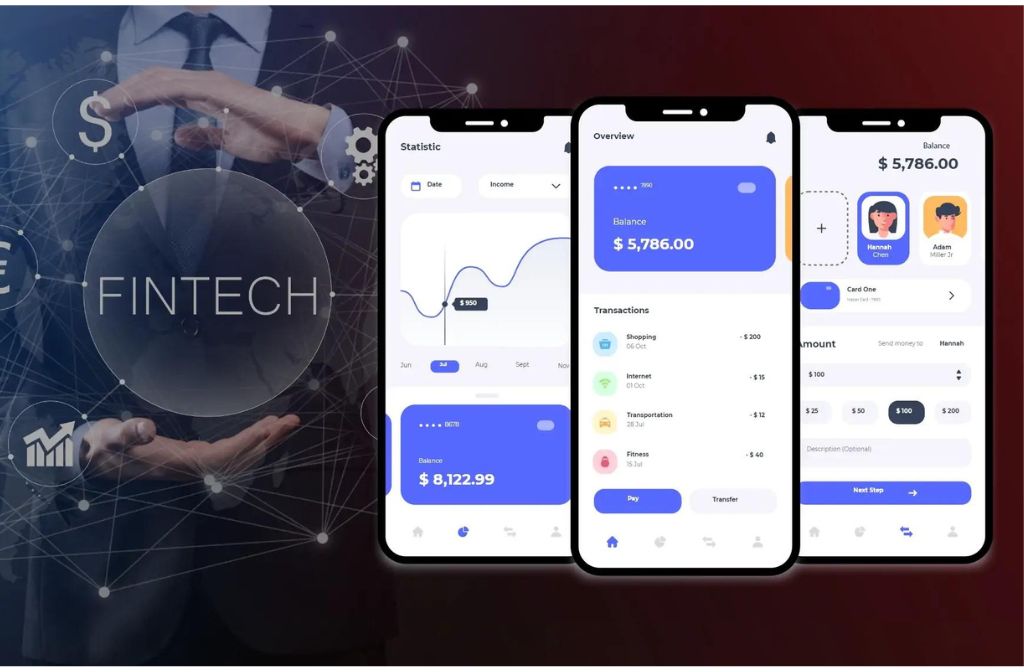
    Fintech Apps: Global Finance Redefined with the Revolut Experience

    The evolutionary field of Fintech Apps has now come along to change and will show what’s next for Fintech.

    How people handle money, transact, and consider banks by revolutionizing their perception. 

    The Revolut app is one of these disruptors and it has changed how you handle money across the globe.

    The Rise of Fintech Apps

    There are many Fintech Apps such as Revolut which have changed the way people bank, making it more flexible and less traditional. 

    However, such apps are breaking down boundaries courtesy by app developers ensuring that people can access financial products anywhere, even in remote areas. 

    Revolut and other Fintech Apps enable individuals with unique characteristics such as user-friendly interfaces, convenient banking operations, and individual financial intelligence that equip them with better knowledge on how best to deal with cash at home and abroad.

    The Future Landscape Of Fintech Apps

    The next-generation landscape app development company in New York promises a new age of widespread use, individually targeted funds, and revolutionary change. 

    As we speak, fintech Apps are still reinventing the whole world of finance, as we have techy users looking for straightforward solutions for their challenges and opportunities. 

    In addition, the emergence of new technologies should lead to democratic financial services with AI, blockchain app development, and big data for individual experience. 

    The future is set for a more connected and inclusive financial system with key trends in  Fintech apps leading change as innovation becomes the backbone on which traditionally rigid boundaries are broken.

    Exploring the Revolut Experience

    The borderless abilities of Revolt allow customers to do worldwide transactions without huge expenses, exchanging currency at interbank rates, making it easier for frequent travelers and businesses between countries.

    Multi-currency accounts feature on the app, making it possible to hold, exchange as well and transact in any currency you desire. 

    The budgeting tools and analysis offered by Revolut empowered users to track employee spending in real time and instilled financial discipline.

    The Impact on Global Finance

    The fintech apps disrupt conventional banking tradition prompting legacy institutions to respond to changing financial realities. 

    Financial apps such as Revolut greatly contribute towards financial inclusion due to their ease of use, and that includes people who don’t have banks. 

    It shows how innovation drives away changes, giving a resolution tailored to the modern user’s needs and aspirations.

    Redefining Financial Norms

    Revolut disrupts finance while incorporating strong security measures like encryption and security rules so that users can have confidence in it.

    Partner up with different sectors for service improvement, and product expansion, as well as addressing customers’ needs and preferences toward financial technologies. 

    Despite this, it is still difficult for Fintech apps to navigate existing regulatory frameworks, yet they commit to comply with regulations and strive to achieve conformity.

    Revolutionizing Finance 

    Revolut portends a new era of easily accessible and innovative finances. 

    These enterprise mobile app development company in New York have transformed the global finance landscape, presenting users with unlimited freedom, convenience, and power for managing global finances. 

    With time, such Fintech Apps will play greater roles in redrawing the future of finance toward inclusive forms of service delivery incorporating state-of-the-art technologies.

    Conclusion

    Fintech Apps act as disruptors of conventional practices in the financial sector by introducing participatory and client-oriented approaches. 

    which connects various people around the world in a way that creates opportunities even among the otherwise underserved populations who have difficulties gaining access to available finances in society. 

    Apps help in collaboration, navigate the complexity involved with regulation, and ultimately, create trustworthiness and reliability. 

    However, Fintech Apps remain front runners on the way towards the future of finance that will be accessible, responsive, and safe. 

    The Fintech Apps journey represents more than a revolution, it is an aspiring vision of a techno-based, open society’s financial future.

  • Mobile App Development Pricing and Cutting-Edge Monetization Trends

    Mobile App Development Pricing and Cutting-Edge Monetization Trends

    Mobile app development have become an essential part of our everyday lives, providing convenience, entertainment, and productivity at the touch of a button.

    However, a complex procedure goes into developing, deploying, and sustaining these apps.

    We’ll look at the price considerations of mobile app development, and the newest monetization methods developers use to keep and expand their applications in a dynamic marketplace.

    The Price of Mobile App Development:

    The cost of mobile app development might vary greatly depending on a variety of factors.

    These criteria include the app’s level of complexity, and its platform iOS, Android, or both.

    The working team’s geographic location, and additional features and functions.

    Simple apps with basic functions will cost less to design than big, feature-rich apps with advanced functionality.

    Developing an app for a single system is typically less expensive than developing one for both iOS and Android.

    Development expenses might vary depending on where the development team is located.

    Developers in lower-cost areas may be able to provide more reasonable rates.

    High-quality design and user experience may increase development expenses while simultaneously increasing user engagement.

    Continuous maintenance and upgrades are critical for your app’s long-term success.

    Testing and quality assurance methods might be costly, but they are necessary for producing trustworthy software development company.

    Modern Monetization Trends:

    After investing in the development of a high-quality mobile app, it’s critical to explore monetization techniques that correspond with your company’s objectives. Here are some of the most recent app monetization trends.

    Offering a free version of your app with restricted functionality. While charging for premium, additional functions, or content as in-app purchases.

    Might attract a large number of users and convert some of them into paying customers.

    Ads embedded into your software are a popular approach to making cash. Consider non-intrusive forms such as banner advertisements, interstitials, and rewarded videos.

    Subscriptions give a consistent source of money. Provide tiered subscription options that provide varied levels of access to premium services or content.

    If your app captures user data while complying with privacy laws, you may monetize it.

    By providing valuable information to other organizations or utilizing it for targeted advertising.

    Engage your user base in the app development company by establishing crowdfunding drives or giving premium features in exchange for donations.

    Choosing the Right Monetization Strategy:

    Your application’s profitability approach will be determined by elements such as the demographic you want to target, app subject matter, and user behavior.

    Combining different tactics to diversify your revenue streams is frequently advantageous.

    Furthermore, analyzing user comments and app statistics on a frequent basis might help you fine-tune your monetization strategy over time.

    Embracing the Future of Mobile App Development:

    As the mobile app environment evolves, it becomes increasingly important to keep current on the newest development practices and monetization trends.

    You can design a successful app that not only serves the demands of your customers but also creates sustainable income for you and your company.

    By knowing the expenses involved with app development and implementing new monetization tactics.

    Apps Cre8ve | app development company in Florida, is committed to assisting businesses in navigating the complicated world of mobile app development and monetization.

    We’re here to assist you in bringing your app concept to life and maximizing its earning potential for a modern digital marketplace. By using our knowledge and the latest technologies.

    Conclusion:

    The world of mobile app development is both exciting and challenging. It requires a careful balance of investment, innovation, and user-centric thinking.

    When considering app development pricing, it’s important to focus on quality and long-term benefits.

    Similarly, selecting the right monetization strategy is crucial for both profitability and user satisfaction.

  • E-commerce in Your Pocket: Mobile App Development

    E-commerce in Your Pocket: Mobile App Development

    E-commerce has become an essential part of our everyday lives in the modern fast-paced digital environment. 

    It is no longer a luxury, but rather a need. Mobile app development company has emerged as an essential tool as firms adjust to suit the ever-increasing desires of online buyers. 

    These portable shopping platforms deliver convenience, accessibility, and a plethora of possibilities right to your fingertips.

    E-commerce: The Mobile Shopping Revolution:

    The Mobile Shopping Revolution has profoundly changed the way we browse, choose, and purchase things in today’s fast-paced digital world. 

    Mobile applications have become the go-to e-commerce platforms, providing a simple and accessible buying experience. 

    They’ve made shopping a breeze with user-friendly interfaces, tailored suggestions, and smooth checkouts. 

    These pocket-sized companions enable us to shop for food and electronics at any time and from any location. 

    They engage us with push alerts and special offers, foster a feeling of community via customer evaluations, and have barely touched the surface of their potential. 

    The Mobile Shopping Revolution exemplifies the boundless possibilities at our fingertips.

    User-Friendly Interface:

    Apps Cre8ve | App Development Company In Florida.

    Mobile apps have a user-friendly interface that is optimized for tiny displays. 

    They provide simple navigation, tailored suggestions, and quick checkout procedures. 

    The end effect is a delightful shopping experience that keeps people returning for more.

    Accessibility Anytime, Anywhere, and Streamlined Payment Options:

    The convenience of smartphone apps is their appeal. Your favorite stores are just a tap away.

    Whether you’re waiting to meet a buddy, commuting to work, or sitting on your couch. 

    This ease of access has resulted in greater sales and client loyalty.

    Purchasing is straightforward using mobile apps. Numerous forms of payment can be saved for quick and secure purchases. 

    The use of digital wallets, credit cards, and even buy now, pay later alternatives makes the checkout process easier.

    Customer Reviews and Feedback:

    Users may also share their experiences using mobile apps. 

    Customers may read reviews, ask questions, and offer comments, fostering a feeling of community and trust.

    Push Notifications and Offers:

    Retailers utilize mobile applications to keep their customers interested. 

    They notify customers via push alerts about future deals, new arrivals, and tailored offers. 

    It’s a direct channel of contact that keeps customers informed and encourages them to purchase more frequently.

    Future of E-commerce:

    Mobile apps will only improve as technology progresses. The convenience of mobile shopping is going to get significantly more enticing with augmented reality.

    For virtual try-ons, improved AI for the suggestion of products, and greater security measures.

    Conclusion:

    As the Mobile App Development age of Ecommerce development solutions begins, it is apparent that our shopping experiences will never be the same. 

    With its intuitive user experience and 24/7 easy access, the compact shopping revolution has altered how we interact with our favorite brands. 

    Push alerts, frictionless purchases, and user evaluations have all become indispensable shopping companions. 

    With augmented reality, better AI, and stronger protection, the future of e-commerce through mobile applications offers even more potential. 

    Our smartphones have become the entrance to a world of products and experiences, altering how we purchase, connect, and live with each touch and swipe.

  • The Role of Augmented Reality in Enhancing the E-commerce Mobile Apps Experience

    The Role of Augmented Reality in Enhancing the E-commerce Mobile Apps Experience

    To remain profitable in the current digital era, when online buying has become commonplace, it is essential to improve the e-commerce mobile apps experience and mobile app development efficiently and effectively. 

    Augmented reality (AR) is a technology that is transforming this industry. 

    Let’s look at how augmented reality (AR) is transforming how we purchase online and improving the e-commerce mobile apps experience.

     E-commerce Mobile Apps Experience: Enhanced Engagement

    Mobile e-commerce applications use augmented reality to engage users in fresh ways. 

    To access unique information, such as behind-the-scenes movies, product tales, or games with interactive elements, a product’s QR code might need to be scanned. 

    This helps foster brand loyalty and a feeling of community.

    E-commerce Mobile Apps Challenges and Considerations

    Although augmented reality (AR) has a lot of promise, there are still certain obstacles to be solved. 

    Such as the requirement for high-quality AR content and assuring interoperability with a variety of devices. 

    Additionally, some users may worry about their privacy when utilizing AR apps.

    Virtual Try-Ons And E-commerce Mobile Apps

    Virtual try-ons are one of the biggest and most interesting uses of AR in e-commerce. 

    Imagine being able to digitally try on clothing, footwear, or accessories from the comfort of your home. 

    AR-enabled apps use the camera function on your smartphone to place digital representations of merchandise over your actual image. 

    With this function, online purchasing is not merely less unsure but also more enjoyable and engaging.

    Visualizing Products in Your Space

    Have you ever thought about how that new sofa would look in your living room or whether that piece of art would look great hanging on your wall? 

    You may visualize things using augmented reality in your home. You can see how the item would look and seem by merely aiming the camera on your smartphone at the location. Which can help you make better purchasing selections.

    Interactive Product Information

    Product information comes to life using AR. You may engage with interactive information, reviews, and even user-generated material by pointing a mobile device at a product.

    With the help of this immersive experience, customers may learn more and feel more confident in their decisions.

    Reducing Returns

    Purchasing products via the Internet has its drawbacks, one of which is the inconvenience of returning goods that don’t live up to your expectations. 

    By providing a more accurate preview of things, AR lessens the likelihood of disappointment and the necessity for returns.

    Conclusion

    Augmented reality (AR) is a game-changer for the app development company Florida and pleasure of using an e-commerce mobile app rather than just a new technological advancement curiosity. 

    Online purchasing has been turned from a two-dimensional, occasionally ambiguous procedure into an immersive, interactive one thanks to augmented reality.

    With virtual try-ons, the ability to see things in your area, and interactive details about products.

    Augmented reality (AR) allows customers to make better decisions and engage with brands at a level never before seen in online shopping.

    Although there are difficulties, the advantages, such as decreased returns and enhanced brand loyalty, are too enticing to resist.

    Our internet shopping experiences will certainly be improved much further as augmented reality technology develops.